Why VU Past Papers Matter for Exam Preparation
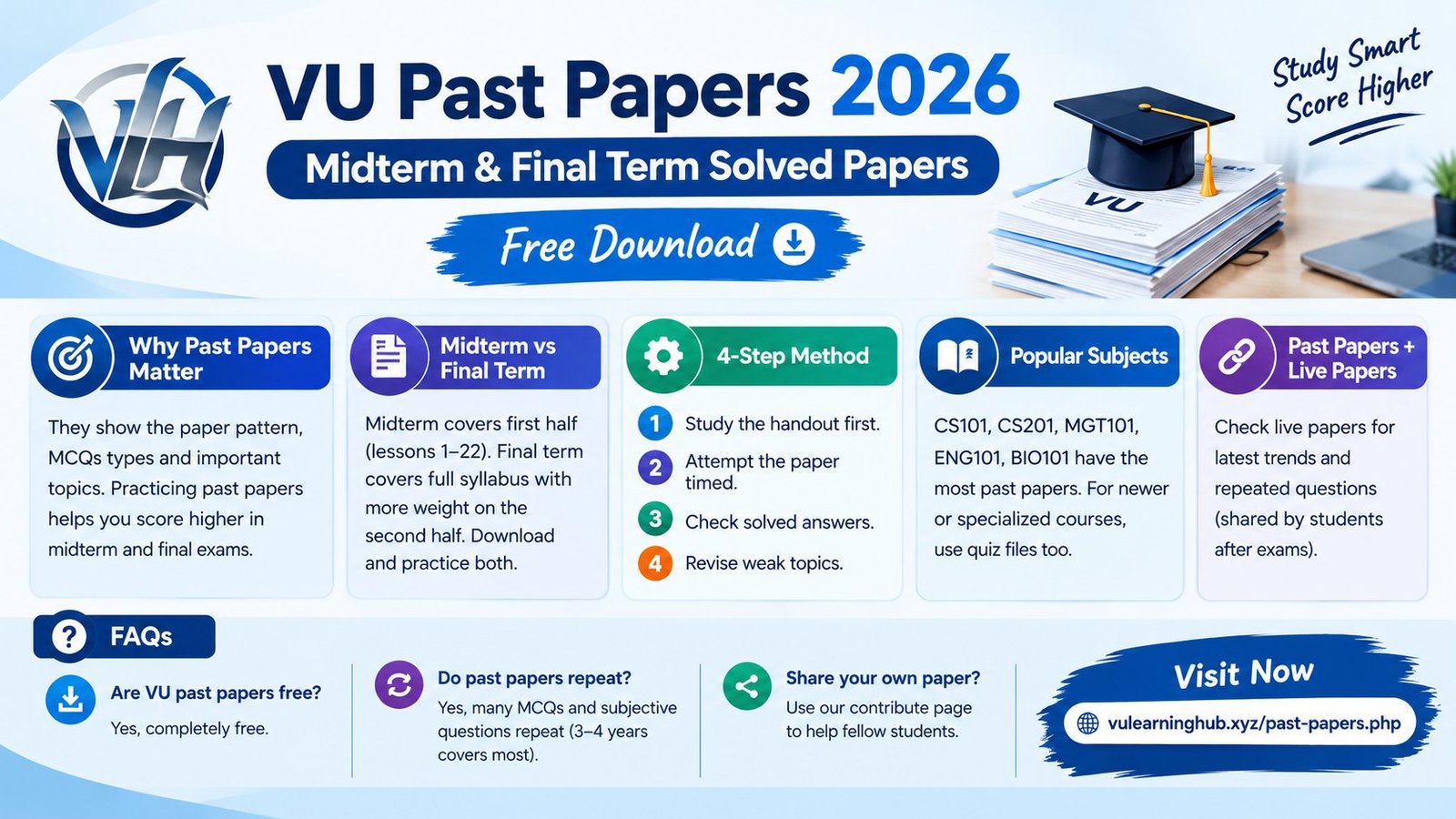
Every Virtual University student knows that VU past papers are the single most important resource for exam preparation. It does not matter how many hours you spend reading handouts — if you have never seen the actual paper pattern, you walk into the exam hall half-prepared. Past papers show you the exact paper pattern, the types of MCQs asked, which topics carry the most marks, and how subjective questions are framed. Students who practice with solved past papers consistently score higher in both midterm and final term exams, and this is not a coincidence — it is the result of preparing with the right material in the right way.
Think of it like this: the handout teaches you the syllabus, but past papers teach you the exam. Both are necessary, but most students only focus on the first and ignore the second until it is too late. By the time you finish reading this guide, you will know exactly how to use past papers to prepare smarter, not just harder.
Midterm Past Papers vs Final Term Past Papers
Virtual University conducts two major exams every semester, and they test different parts of your course. VU midterm past papers cover roughly the first half of the course (usually lessons 1–22), while VU final term past papers cover the full syllabus with extra weight on the second half. This distinction matters because many students make the mistake of preparing the full syllabus for midterms or only the second half for final terms — both approaches waste precious study time.
Download both types and practice them separately. This mirrors the real exam structure and trains your brain to recall the right portion of the syllabus under pressure. Browse our complete collection of VU past papers — every file is free to download, no signup needed.
How to Use Solved Past Papers Effectively
Simply downloading past papers is not enough — you need a method. Follow this 4-step method that toppers use:
- Study the handout first — download the VU handouts for your subject and read the relevant lessons. Never attempt a past paper on topics you have not studied; it only damages your confidence.
- Attempt the paper without help — solve a past paper under timed conditions, just like the real exam. Set a timer, close your books, and write honestly. This is the only way to find your real weak areas.
- Check solved answers — compare your answers with the solved MCQs and subjective solutions. For every wrong answer, write down why you got it wrong: was it a concept gap, a careless mistake, or a topic you skipped?
- Revise weak topics — go back to the handout for any topic where you lost marks. This targeted revision is ten times more effective than re-reading the entire handout.
Repeat this cycle for at least 3–4 past papers per subject. You will notice a pattern: the same types of questions appear again and again, and your score will climb with each attempt.
Which Subjects Have the Most Past Papers?
High-enrollment courses like CS101, CS201, MGT101, ENG101, and BIO101 have the largest collections of past papers because thousands of students attempt them every semester. More students means more papers shared, more solved versions, and better coverage of repeated questions. If you are studying one of these popular subjects, you are lucky — practice material is abundant.
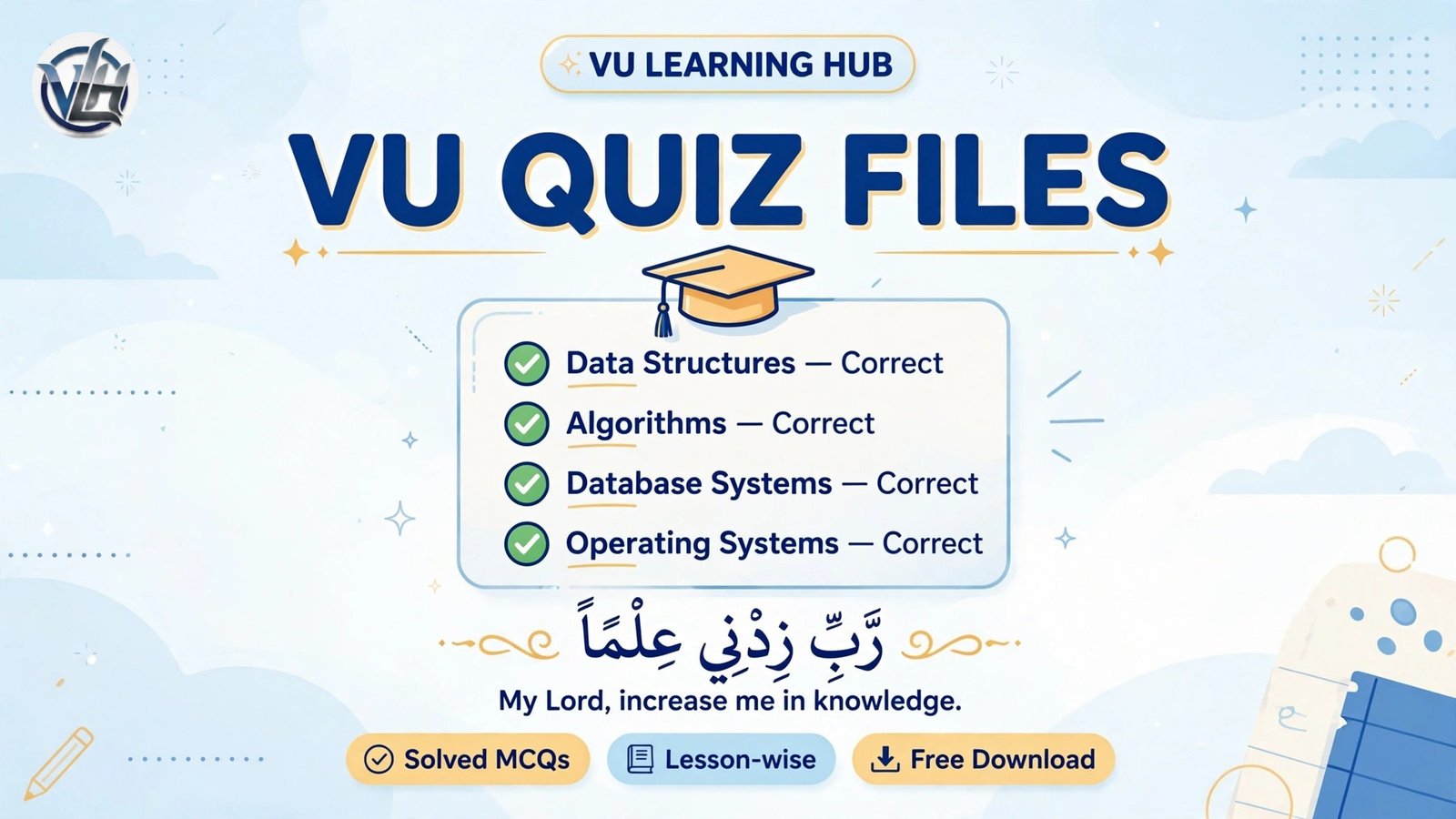
Newer or specialized courses have fewer papers. For those subjects, do not panic — combine the available past papers with VU quiz files for complete preparation. Quiz files contain lesson-wise MCQs that often appear in exams, filling the gap left by missing past papers.
Past Papers + Live Papers = Best Combination
Along with past papers, check the VU live papers section — these are papers shared by students right after their exams, so you see the most recent paper trends and repeated questions. While past papers show you history, live papers show you the present. Together, they give you the complete picture.
Many students ignore live papers because they seem unofficial, but they are actually the freshest source of exam intelligence. A question that appeared in last week's live paper has a real chance of appearing in your paper too, especially in subjects with a limited question bank.
Common Mistakes Students Make with Past Papers
After helping thousands of VU students, we have seen the same mistakes repeated every semester. Avoid these:
- Only reading solved papers instead of attempting them. Reading a solved paper feels productive but builds zero exam skill. Always attempt first, then check.
- Practicing only MCQs and ignoring subjective questions. Subjective questions carry significant marks — practice writing full answers, not just ticking options.
- Using outdated papers only. Paper patterns evolve. Mix older papers (for concepts) with recent ones (for current trends).
- Memorizing answers instead of understanding concepts. VU often changes the wording or values in repeated questions. Understand the concept behind every answer.
How Many Years of Past Papers Should You Practice?
A common question: is one year enough, or do you need five? The honest answer depends on your subject. For most courses, 3–4 years of past papers is the sweet spot — it covers the majority of repeated questions without overwhelming you. For high-enrollment subjects with large paper banks, even 2 years can be enough if you practice thoroughly.
Quality beats quantity. Ten papers attempted properly (timed, checked, revised) are worth more than thirty papers skimmed casually. Focus on understanding every question you get wrong, and you will be ready.
Where to Download VU Past Papers Free
You do not need to join paid WhatsApp groups or buy paper banks. VU Learning HUB provides free VU past papers for midterm and final term, organized by subject and semester. Every file is free, no signup required, and new papers are added regularly — including live papers shared by students after their exams.
If you have papers that are not on the site yet, consider sharing them through our contribute page. Your one upload could help thousands of fellow students.
How to Analyze Paper Patterns Like a Topper
Here is a technique most students never use: after solving 3–4 past papers of a subject, sit down with a blank page and list every topic that appeared, marking how many times each one came up. You will discover that 20% of the syllabus produces 80% of the questions. This is your high-priority list — master these topics first, and you secure the bulk of your marks even if time runs short.
Pay special attention to the format of repeated questions, not just their topics. Does the examiner prefer definition-based MCQs or application-based ones? Are subjective questions usually "explain" type or "differentiate" type? This format intelligence tells you how to study, not just what to study.
Solved vs Unsolved Papers: Which Should You Trust?
Not all solved papers are equal. Some solutions floating around in WhatsApp groups contain wrong answers that students memorize blindly — a disaster in the exam hall. Prefer solved papers from trusted sources like VU Learning HUB, where solutions are cross-checked. When in doubt about an answer, verify it from the handout yourself.
Unsolved papers have their place too: use them for pure self-testing once you have finished learning. Attempt an unsolved paper, then check your answers against the handout or a trusted solved version.
Frequently Asked Questions
Are VU past papers free to download?
Yes — every past paper on VU Learning HUB is completely free. No signup, no payment, no hidden charges.
Do past papers repeat in VU exams?
Many MCQs and subjective questions repeat with slight changes. Practicing 3–4 years of past papers covers most of the exam. However, always understand the concepts — VU sometimes rewords questions or changes values.
Are solved past papers better than unsolved ones?
Solved papers are better for learning because you can check your work immediately. But always attempt the paper yourself first before looking at solutions.
Where can I share my own past paper?
Use our contribute page to share papers with fellow students. It takes two minutes and helps the entire VU community.
A Dua for Your Exams
Before we finish, remember that effort and faith go together. As you prepare, keep this beautiful dua on your tongue:
رَّبِّ زِدْنِي عِلْمًا
"My Lord, increase me in knowledge." (Quran 20:114)
Study with sincerity, trust in Allah, and walk into your exam hall with confidence. You have prepared well — now let your hard work speak.
Final Thoughts
Past papers are not a shortcut — they are a smartcut. They do not replace studying; they make your studying count. Download your subjects' papers today, follow the 4-step method, avoid the common mistakes, and combine past papers with live papers for the complete picture. Your grades will thank you. Good luck, and remember — together we learn, together we grow!