Studying online sounds simple until you actually sit down to do it. No classroom, no professor watching over your shoulder, and a phone buzzing every few minutes. If you are a Virtual University student, you already know this struggle. One moment you plan to finish three chapters, and the next you are scrolling through your phone wondering where the last hour went. This is not a sign of laziness. It is simply how the human brain reacts to unstructured environments. Online study motivation does not come naturally to most people because the entire system removes the external structure that traditional classrooms provide.
The good news is that motivation is not something you either have or do not have. It is a skill you build through small, repeated habits. VU students who consistently score well in quizzes, assignments, and GDBs are not necessarily smarter than everyone else. They have simply built a system that keeps them moving even on days when they do not feel like studying. This guide walks you through practical, realistic ways to stay motivated while studying online, from building a schedule that actually works to using proven techniques like the Pomodoro method. If you have ever felt stuck, distracted, or unsure how to keep going through a semester, this article is written for you.
Why Online Learning Makes Motivation Harder
Traditional classroom learning comes with built-in accountability. You have a fixed timetable, a teacher checking attendance, and classmates around you working on the same material. Online learning removes almost all of that. Your VULMS dashboard opens whenever you want it to, and closes just as easily. Nobody notices if you skip a day of studying.
This lack of structure is the main reason procrastination becomes such a common problem for VU students. Psychologists call this "decision fatigue." When you have to decide every single day when to study, for how long, and what to cover, your brain uses up mental energy just making these choices before you even open a book. Over time, this leads to avoidance, because avoiding the decision feels easier than making it.
Another factor is the absence of immediate feedback. In a physical classroom, you get instant reactions from a teacher or classmates. Online, you might submit an assignment and not see any result for days. This delay makes the brain treat studying as less rewarding, which lowers motivation even further. Understanding these hidden barriers is the first step toward fixing them. Once you know why motivation dips, you can build a system specifically designed to work around it rather than fighting your own psychology every day.
Understanding and Avoiding Procrastination
Procrastination is not about time management alone. It is often an emotional response to a task that feels boring, difficult, or overwhelming. When a VU assignment feels too complex, the brain looks for an escape, usually in the form of social media, YouTube, or suddenly deciding to clean your room. Recognizing this pattern is key to avoiding procrastination for good.
One effective method is breaking tasks into smaller, less intimidating pieces. Instead of telling yourself "I need to finish this assignment today," try "I will just write the introduction paragraph right now." Small, specific tasks feel far less threatening than vague, large ones, and starting is usually the hardest part. Once you begin, momentum tends to carry you forward naturally.
Another useful trick is the two-minute rule. If a task takes less than two minutes, such as checking your VULMS announcements or downloading a handout, do it immediately instead of postponing it. Small delayed tasks pile up over time and create the mental clutter that fuels bigger procrastination later. You can pair this habit with our guide on managing VU assignment deadlines for a more complete system.
It also helps to identify your personal procrastination triggers. Some students procrastinate more at night, others right after checking social media. Once you know your pattern, you can plan your study sessions around it, avoiding the exact conditions that usually derail you.
Create a Study Schedule That Actually Works
A study schedule is not about filling every hour of your day with books. It is about creating predictable blocks of time so your brain stops negotiating with you every single day. When studying becomes a scheduled habit rather than a daily decision, motivation naturally improves because you remove the friction of deciding when to start.
Start by mapping out your fixed commitments, including VU lecture watching time, quiz deadlines, and assignment due dates. Then assign specific study blocks around them. It helps to study during the same hours each day, since consistency trains your brain to associate that time with focused work. Many successful VU students study early morning before daily distractions build up, while others prefer late evening once household noise settles down. There is no universal best time, only the time that fits your personal routine.
Avoid the common mistake of creating an overly ambitious schedule that ignores rest, meals, or personal responsibilities. A realistic schedule you can actually follow for weeks is far more valuable than a perfect one you abandon after three days. If you are unsure how to structure a weekly plan around VU's semester calendar, our detailed VU semester planning guide breaks this down subject by subject.
Review and adjust your schedule every week. Some weeks need more time for quizzes, others for GDBs or assignments. Treat your schedule as a flexible tool rather than a rigid rulebook, and you will find it far easier to stick to over an entire semester.
Set Daily Goals to Build Momentum
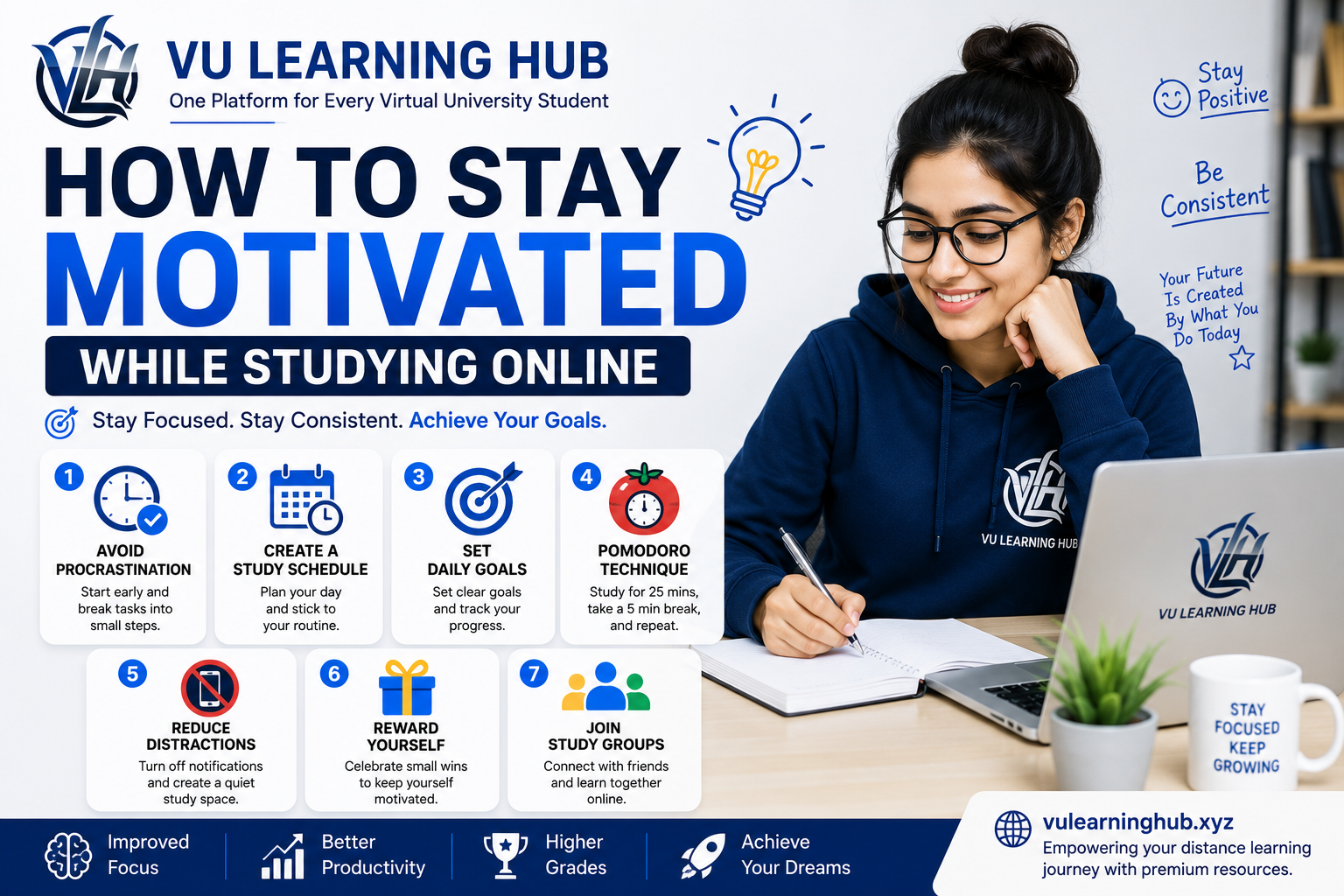
Long-term goals like "pass this semester with good grades" are important, but they rarely motivate you on a Tuesday afternoon when you feel tired. Daily goals work better because they give your brain something specific and achievable to focus on right now. This is one of the most underrated tools for online study motivation.
A good daily goal is clear, measurable, and realistic. Instead of "study operating systems," try "complete lecture 12 notes and attempt five MCQs." This specificity removes ambiguity and gives you a clear finish line. When you complete the goal, your brain releases a small hit of satisfaction, which reinforces the habit of showing up again tomorrow.
Writing your goals down, whether in a notebook or a simple app, increases the chance you will actually follow through. Seeing a written list also gives you a visual record of progress, which becomes motivating on its own during slower weeks. Try setting no more than three main goals per day. Overloading your list often backfires, leading to frustration when you cannot finish everything, which then discourages you from planning the next day at all.
Pair your daily goals with a short evening review. Spend two minutes checking what you completed and what still needs attention. This habit keeps you aware of your actual progress instead of relying on vague feelings about how the week is going, and it naturally feeds into a more accurate weekly study schedule.
Use the Pomodoro Technique to Stay Focused
If you struggle to sit through long study sessions, the Pomodoro Technique might be the missing piece. This method involves studying in focused blocks of twenty five minutes, followed by a five minute break. After completing four rounds, you take a longer break of fifteen to thirty minutes. The structure sounds simple, but it works remarkably well for online learners.
The reason this technique helps online study motivation so much is that it removes the pressure of unlimited time. When you tell yourself to "study for the next few hours," your brain resists because the task feels endless. But committing to just twenty five minutes feels manageable, even on low energy days. Most students find that once they start, they naturally want to continue past the timer.
To use this method effectively, choose one specific task per Pomodoro session, such as reading a particular handout or solving a set of past papers. Avoid switching between subjects mid session, since this reduces the deep focus the technique is designed to create. During your five minute breaks, step away from your phone and screen. Stretch, drink water, or simply look outside. Screen based breaks often extend far longer than five minutes and defeat the purpose entirely.
You can use any basic timer app or even your phone's built in clock for this method. Over a few weeks of consistent use, many students report finishing VU assignments faster and retaining lecture content better, simply because focused, timed sessions reduce mental fatigue compared to long, unstructured study marathons.
Reduce Distractions in Your Study Environment
Your environment has a bigger effect on motivation than most students realize. If your phone sits next to your laptop while you study, your brain knows a distraction is always within reach, which makes sustained focus much harder to maintain. Reducing distractions is not about willpower alone. It is about designing a space where staying focused becomes the easier default option.
Start with your phone. Put it in another room, or at minimum, turn on airplane mode during study sessions. Notifications from social media apps are specifically designed to pull attention away, and even a quick glance can break your concentration for several minutes afterward. If you need your phone for VULMS access, consider using a separate device or closing unnecessary apps before you begin.
Your physical study space matters too. A cluttered desk with unrelated items creates visual noise that competes for your attention. Keep only what you need for the current task, whether that is your laptop, notebook, or specific handout. Background noise also plays a role. Some students focus better in silence, while others prefer instrumental music without lyrics. Test both approaches and stick with whichever helps you concentrate longer without checking the time repeatedly.
Browser tabs deserve special attention for online learners. It is tempting to keep social media or entertainment sites open in another tab "just in case." Close them completely during study sessions. If you find yourself constantly tempted by specific websites, browser extensions that temporarily block distracting sites can help remove the decision entirely, making focus the path of least resistance rather than something you have to fight for every few minutes.
Reward Yourself for Completing Tasks
Motivation improves dramatically when studying feels connected to something enjoyable, not just obligation. Rewarding yourself after completing tasks trains your brain to associate studying with positive outcomes rather than pure stress, which makes it easier to return to your books the next day without dread.
Rewards do not need to be expensive or elaborate. After finishing a Pomodoro session, allow yourself a five minute break to check messages or watch a short video. After completing a full day's study goals, treat yourself to something you enjoy, whether that is a favorite snack, an episode of a show, or simply relaxing without guilt. The key is making the reward proportional to the effort, so small tasks get small rewards and bigger accomplishments get bigger ones.
Some students find it helpful to create a visual tracking system, such as marking completed study days on a calendar or checking off tasks in an app. Watching a streak build over time becomes its own source of motivation, since nobody wants to break a good run once it has started. This taps into the same psychology that makes habit tracking apps so popular.
Avoid using your reward system as an excuse to delay difficult tasks indefinitely, though. The reward should come after the task, not before it, and it should not become so large that it distracts from your actual study goals for the day. Balance is what makes this method sustainable over an entire VU semester rather than something you abandon after two weeks.
Join Study Groups for Accountability and Support
Studying alone for an entire semester can feel isolating, especially in an online setup where you rarely interact with classmates face to face. Joining a study group solves this problem by reintroducing the social accountability that traditional classrooms naturally provide. When other people expect you to show up and contribute, motivation tends to follow almost automatically.
VU students often form study groups through WhatsApp, Discord, or Facebook communities dedicated to specific courses. These groups are useful for clarifying confusing lecture topics, sharing notes, and discussing assignment requirements before deadlines. Explaining a concept to someone else also deepens your own understanding, since teaching forces you to organize your thoughts more clearly than passive reading does.
When choosing or forming a study group, look for members who are genuinely committed rather than groups that turn into casual chat channels. A group of three to five focused students usually works better than a large, unmanageable one. Set clear expectations early, such as specific times for group discussions or shared deadlines for reviewing material together.
If you are unsure where to find active VU study communities, our VU study groups and community resources page lists course specific groups where students regularly share updates, quiz dates, and past papers. Being part of a community also reduces the anxiety that comes from studying in isolation, since you quickly realize that other students face the same struggles you do, which itself becomes a quiet source of motivation on tough days.
Building Long-Term Consistency Beyond Motivation
Motivation naturally rises and falls throughout a semester, and expecting it to stay constant is unrealistic. The students who succeed long term are not the ones who feel motivated every single day. They are the ones who built habits strong enough to continue working even when motivation is low.
This is why every strategy discussed so far, from scheduling to Pomodoro sessions to study groups, matters more as a system than as individual tricks. Relying on motivation alone means your progress depends entirely on your mood, which is unpredictable. Relying on habits means progress continues regardless of how you feel on any given day, because the structure carries you forward automatically.
Track your progress honestly and review it every few weeks. Notice which strategies from this article actually worked for you and which ones did not fit your routine. Everyone is different, and the goal is not to copy someone else's exact system but to adapt these ideas into something that fits your life, your course load, and your personal energy patterns throughout the semester.
Give yourself grace on difficult days too. Missing one study session does not undo weeks of progress, but it can if you let one missed day spiral into a week of complete avoidance. The real skill is returning to your routine quickly after a slip, not achieving perfect consistency without any breaks at all.
Final Thoughts
Staying motivated while studying online is not about waiting for inspiration to strike. It is about building small, repeatable systems that make studying easier than avoiding it. From setting clear daily goals to using the Pomodoro Technique, reducing distractions, and joining a supportive study group, each strategy in this guide works together to create a routine you can actually sustain through an entire VU semester.
Start small. Pick one or two ideas from this article, whether that is creating a basic weekly schedule or trying your first Pomodoro session today. Build from there gradually instead of trying to overhaul your entire routine overnight. Motivation grows naturally once you start seeing consistent progress, and consistency is something anyone can build with the right approach.
Frequently Asked Questions
How can I stay motivated when studying alone at home?
Set a fixed study schedule, remove phone distractions from your desk, and join a VU study group so you have some social accountability even while studying independently.
Does the Pomodoro Technique really work for university students?
Yes, especially for online learners. Short focused sessions with regular breaks reduce mental fatigue and make long study sessions feel far more manageable than studying for hours without a break.
What should I do if I keep procrastinating on assignments?
Break the assignment into smaller specific tasks, commit to working on just one small piece for two minutes, and use the momentum from starting to keep going naturally.