Virtual University students now have a fresh reason to open their camera apps. The Media and Performing Arts Society at VU has launched the Flash Reel Competition to mark Pakistan's 79th Independence Day, and it comes with real cash prizes for the best entries. If you enjoy filming short videos, editing on your phone, or simply want to celebrate August 14 in a creative way, this competition was made for you.
This guide covers everything you need to know about the Flash Reel Competition, from prize money and deadlines to practical tips for making a reel that actually stands out. Whether you are a first-time content creator or someone who already posts reels for fun, you will find clear direction here on how to enter and improve your chances of winning.
What Is the VU Flash Reel Competition?
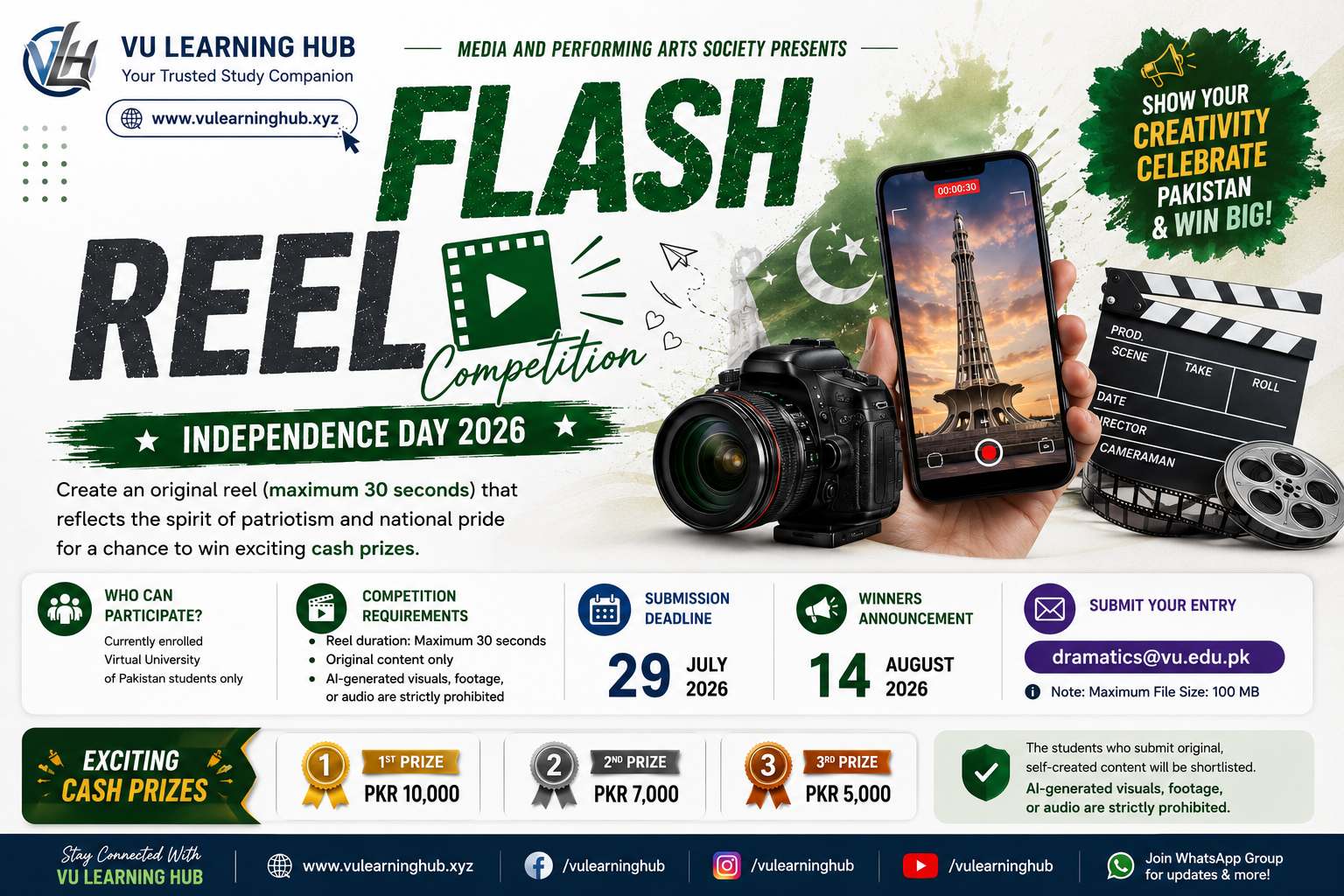
The Flash Reel Competition is an official activity organized by the Media and Performing Arts Society, Virtual University of Pakistan. It invites currently enrolled VU students to create an original reel, no longer than 30 seconds, that captures the spirit of patriotism and national pride. The competition ties directly into Pakistan's Independence Day celebrations, giving students a creative outlet to express what freedom and national identity mean to them.
Unlike academic tasks such as GDBs or quizzes, this is a purely creative and voluntary activity. There is no assignment weight attached to it, no grading rubric tied to your CGPA, and no pressure beyond doing your best creative work. That said, it still reflects the same discipline VU expects from its students: following instructions carefully, respecting deadlines, and submitting original work.
A reel, in simple terms, is a short vertical video, similar to what you see on Instagram or TikTok. For this competition, the content must center on patriotism, whether that is through visuals of the Pakistani flag, historical references, personal reflections on independence, or a creative montage that captures national pride in a fresh way. The 30-second limit forces participants to be concise and intentional with every second of footage, which is part of what makes this competition genuinely challenging and fun.
Students who are also preparing for their semester workload can check our VU assignment writing guide to balance academic deadlines with extracurricular activities like this one.
Who Organizes the Competition and Why It Matters
The Media and Performing Arts Society is one of the student societies operating under Virtual University's broader student engagement framework. Its purpose is to give VU students, most of whom study remotely and rarely meet classmates in person, a chance to connect through creative and cultural activities. Since VU does not have a traditional physical campus experience for most learners, societies like this one fill an important gap.
Organizing a competition around Independence Day is a deliberate choice. August 14 holds deep meaning for Pakistani students, and asking them to reflect that meaning through short-form video content encourages both creativity and a sense of shared national identity. It also gives distance-learning students, who often feel isolated from campus culture, a reason to participate in something collective and celebratory.
For VU students who are used to submitting assignments and quizzes through the VULMS portal, this competition operates differently. Submissions go directly to the society's email rather than through the learning management system, so it is important to follow the correct process outlined below rather than assuming it works like a regular coursework submission.
Why VU Students Should Consider Participating
Many VU students focus purely on academics because their study routine already feels demanding. But participating in activities like the Flash Reel Competition offers benefits that go beyond a possible cash prize. It gives you a creative break from routine coursework, something that genuinely helps with academic burnout when done in moderation.
There is also a practical incentive. The top three positions receive real cash prizes, which is a meaningful reward for something that takes just a few hours to plan, film, and edit. Beyond the money, having a piece of creative work recognized by a university society is a nice addition to your personal portfolio, especially if you are interested in media, content creation, or digital marketing as a career path later on.
Participating also builds skills that matter well beyond this one competition. Editing a reel teaches you basic video editing, pacing, and storytelling within a tight time limit, skills that transfer directly into future work whether that is marketing, journalism, or simply building a personal brand on social media. If you are the kind of student who already manages your VU semester study schedule efficiently, you likely have enough spare time to put together a strong entry without disrupting your academic routine.
Flash Reel Competition Details: Deadlines and Cash Prizes
Understanding the exact timeline and prize structure is essential before you start filming. Missing a deadline by even a few hours could mean your otherwise excellent reel never gets considered.
Submission Deadline and Result Announcement
The submission deadline for the Flash Reel Competition is 29 July 2026. All entries must reach the organizing committee before this date. Winners will be announced on 14 August 2026, which aligns perfectly with Pakistan's Independence Day, making the announcement itself part of the celebration.
Given that the deadline falls before the announcement date, there will be a review period where the Media and Performing Arts Society shortlists and evaluates all submitted reels. This is why originality and quality matter so much. With potentially hundreds of VU students submitting entries from across Pakistan, only the strongest and most genuine reels will make it to the shortlist.
Cash Prize Breakdown
The competition offers three prize tiers for top performers:
- First position: PKR 10,000
- Second position: PKR 7,000
- Third position: PKR 5,000
These are respectable prizes for a 30-second creative submission, especially considering the low barrier to entry. Most students already own a smartphone capable of shooting decent video, and free editing apps can handle the rest. The financial reward, combined with recognition from the society, makes this a low-risk, high-reward opportunity for students who enjoy visual storytelling.
How to Submit Your Entry Correctly
Submission mistakes are one of the most common reasons good entries get disqualified from university competitions. Read this section carefully before sending your reel.
Where and How to Send Your Reel
All entries must be submitted via email to dramatics@vu.edu.pk. Make sure your video file does not exceed the maximum file size limit of 100 MB. If your file is too large, compress it using a free video compression tool before sending, since most email providers reject oversized attachments anyway.
When you send your submission, include your full name, VU ID, and program in the email body. Although this was not explicitly stated as mandatory, it is standard practice for university competitions and helps avoid confusion if the committee needs to contact you regarding your entry or prize.
Original Content Only
This is the most important rule of the entire competition. The organizers have made it clear that only original, self-created content will be shortlisted. AI-generated visuals, footage, or audio are strictly prohibited. This means you cannot use AI video generators, AI voiceovers, or AI-created background visuals anywhere in your reel.
This rule exists for good reason. The competition is meant to showcase genuine student creativity and effort, not the output of an AI tool. Judges will likely be able to tell the difference between authentic footage and AI-generated content, so attempting to cut corners here is not worth the risk of disqualification. Film your own footage, write your own script if you use one, and edit the video yourself using standard editing apps rather than AI generation tools.
How to Create a Winning Patriotic Reel
Creating a strong 30-second reel requires more planning than most students expect. A rushed video filmed five minutes before the deadline rarely stands out among dozens of other entries.
Content Ideas That Work Well
Start by brainstorming what patriotism genuinely means to you personally, rather than copying generic Independence Day content you have seen online. Some ideas that tend to resonate well include showing your local area decorated for Independence Day, filming a short personal reflection on what freedom means to your family or community, or creating a fast-paced montage of Pakistani flags, monuments, or cultural symbols set to patriotic music.
You could also consider a before-and-after concept, contrasting historical struggle with present-day achievements, or a simple but heartfelt message directed at fellow VU students about unity and national pride. The key is authenticity. Judges reviewing dozens of similar reels will notice which ones feel genuine versus which ones feel like a copy of last year's trending Independence Day video.
Technical Tips for Better Quality
Film in good lighting, ideally natural daylight, since poor lighting is one of the fastest ways to make an otherwise good reel look unprofessional. Shoot in vertical orientation since that is the standard format for reels and looks better on most viewing platforms. Keep your camera steady, either by holding it with both hands or using a basic phone tripod if you have one.
For editing, apps like CapCut or InShot are free, beginner-friendly, and widely used by content creators. Add captions if your reel includes dialogue, since many viewers watch videos without sound initially. Choose background music carefully, and make sure it complements the patriotic theme without overpowering any voiceover or spoken content. Since your time limit is only 30 seconds, trim aggressively. Every clip should serve a clear purpose, and there is no room for filler footage.
Common Mistakes to Avoid When Entering
Even talented students lose out on competitions due to avoidable errors. Being aware of these mistakes ahead of time gives you a real advantage over less prepared entrants.
One frequent mistake is exceeding the 30-second limit. Judges are unlikely to watch beyond the stated time frame, so any content after the 30-second mark essentially does not exist for scoring purposes. Another common issue is submitting low-resolution or shaky footage that undermines an otherwise creative concept. Poor technical quality can overshadow a great idea, so always review your final video on a larger screen before submitting.
Using copyrighted music without considering platform restrictions can also cause problems, particularly if the organizers later share winning entries publicly. Stick to royalty-free music or widely available patriotic songs where possible. Ignoring the file size limit is another avoidable error. Compress your video properly rather than risking a bounced email due to an oversized attachment.
Finally, and most importantly, do not use any AI-generated elements in your submission. Given the explicit rule against AI-generated visuals, footage, or audio, even minor use of AI tools for editing enhancements could disqualify your entry. When in doubt, keep your production process fully manual and self-created from start to finish.
Balancing Extracurricular Activities With Your VU Studies
Participating in the Flash Reel Competition should never come at the cost of your academic responsibilities. VU students already juggle assignments, GDBs, quizzes, and exams on tight schedules, so it helps to treat this competition as a short creative project rather than a major time commitment.
Set aside a single afternoon or evening to brainstorm, film, and edit your reel rather than stretching the process across multiple days. Since the deadline is 29 July 2026, plan to have your entry ready at least two or three days early. This buffer protects you from last-minute technical issues like file compression problems or email delivery delays.
If you are also managing upcoming coursework deadlines during this period, our VU exam preparation resources can help you organize your study time so that a fun activity like this one does not interfere with your semester performance. Treating extracurricular participation as a planned activity, rather than a spontaneous distraction, is what allows students to enjoy both academics and creative opportunities without one suffering because of the other.
Why This Competition Matters Beyond the Prize Money
It is easy to view the Flash Reel Competition purely through the lens of cash prizes, but its real value extends further. For a university built almost entirely around online learning, opportunities for students to express creativity and connect with a shared national identity are genuinely rare. This competition gives thousands of geographically scattered VU students a common project to rally around during Independence Day.
There is also a quieter benefit here related to digital literacy and personal branding. Many students underestimate how valuable basic video editing and storytelling skills have become in today's job market, particularly in marketing, media, and communication-related fields. Participating in a structured competition like this, with a clear brief and deadline, mimics real-world creative work far more closely than most classroom assignments do.
Winning is obviously the ideal outcome, but even students who do not place in the top three walk away having practiced planning, filming, and editing a complete short video under a real deadline. That experience has value on its own, separate from whether it results in prize money. If you enjoy the process, consider following the Media and Performing Arts Society's future announcements for similar creative opportunities throughout the academic year.
Frequently Asked Questions
Who can participate in the Flash Reel Competition?
Any currently enrolled Virtual University student is eligible to participate, regardless of program or semester.
What is the maximum video length allowed?
Your reel must not exceed 30 seconds in total length.
Can I use AI tools to help create my reel?
No. AI-generated visuals, footage, or audio are strictly prohibited, and only original, self-created content will be shortlisted.
Where do I send my submission?
Email your entry directly to dramatics@vu.edu.pk before the 29 July 2026 deadline.
Is there a file size limit for submissions?
Yes, the maximum allowed file size is 100 MB, so compress your video if needed before sending.
Final Thoughts
The Flash Reel Competition is a rare chance for VU students to step away from assignments and quizzes and channel their creativity into something meaningful. With a low barrier to entry, a short time commitment, and genuine cash prizes on offer, there is little reason not to give it a try if you have even a basic interest in video content.
Remember the essentials: keep your reel under 30 seconds, make sure everything is original and self-created, stay within the 100 MB file limit, and submit to dramatics@vu.edu.pk before 29 July 2026. Winners will be announced on 14 August 2026, right alongside the nation's Independence Day celebrations.
Whether you place in the top three or simply enjoy the process of creating something original, participating connects you to a wider VU student community and gives you a creative outlet that pure academics rarely offer. For more updates on VU student activities, competitions, and study resources, keep checking VU Learning Hub throughout the semester.